Order Yard Signs & More

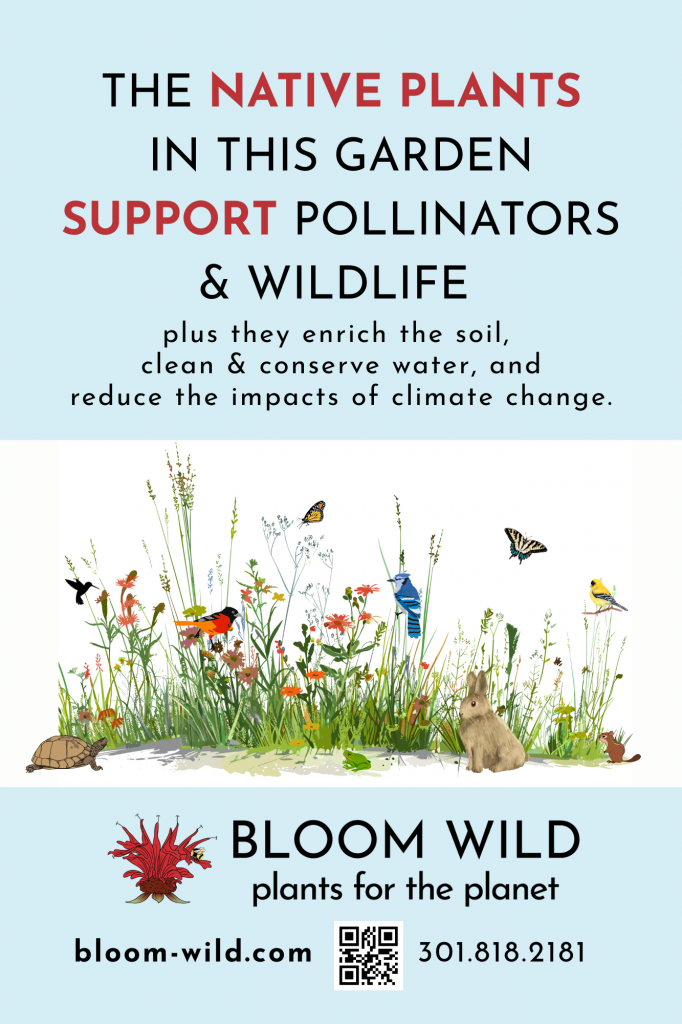
Bloom Wild’s 12″ x 18″ yard sign celebrates the native plants in your garden. Metal stand included. 

$10 per sign or FREE for former/current clients

Text of sign:

THE NATIVE PLANTS IN THIS GARDEN SUPPORT POLLINATORS & WILDLIFE

plus they enrich the soil, clean & conserve water, and reduce the impacts of climate change

Bloom Wild: Plants for the Planet

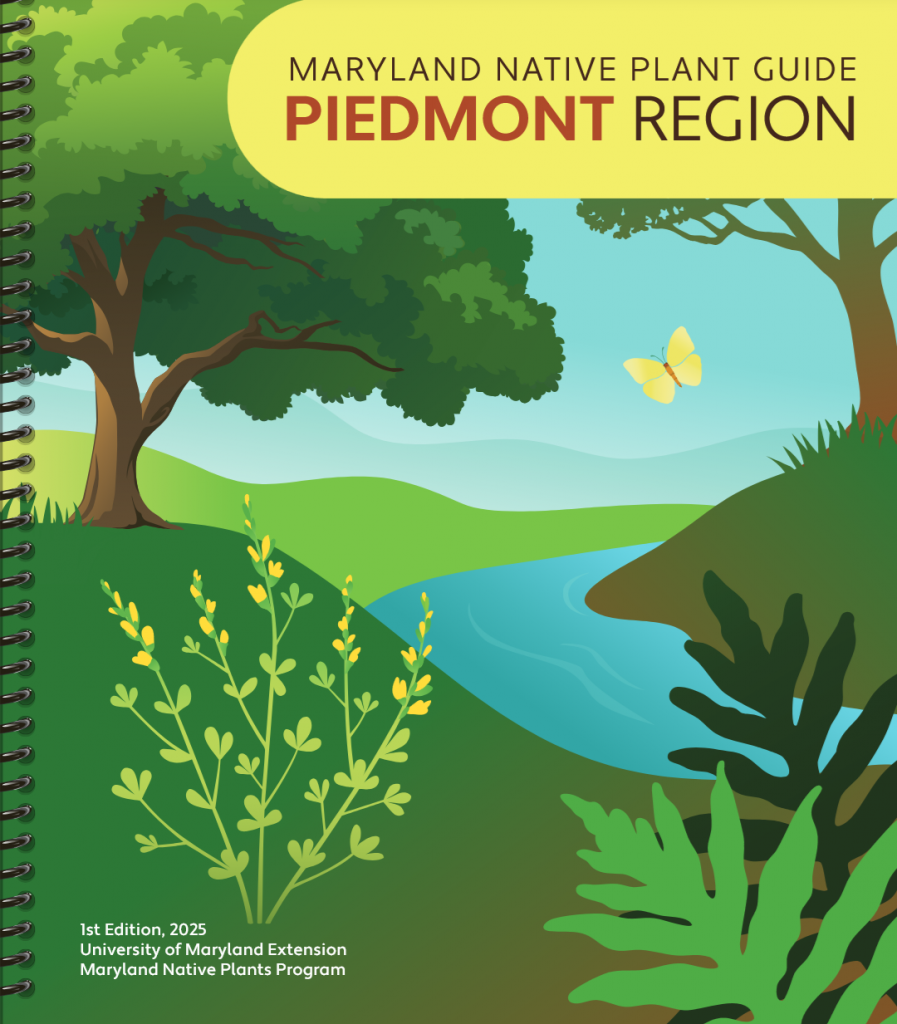
This book is a comprehensive guide of plants native to the piedmont eco-region of Maryland and nearby states. Published 2025.

You can download a pdf copy of this book for free online.

Bloom Wild will sells physical copies, spiral bound, once they are available.

Pro Tips

For more pro tips, be sure to follow Bloom Wild on social media & sign up for email updates!

Grow your own plants from seed!
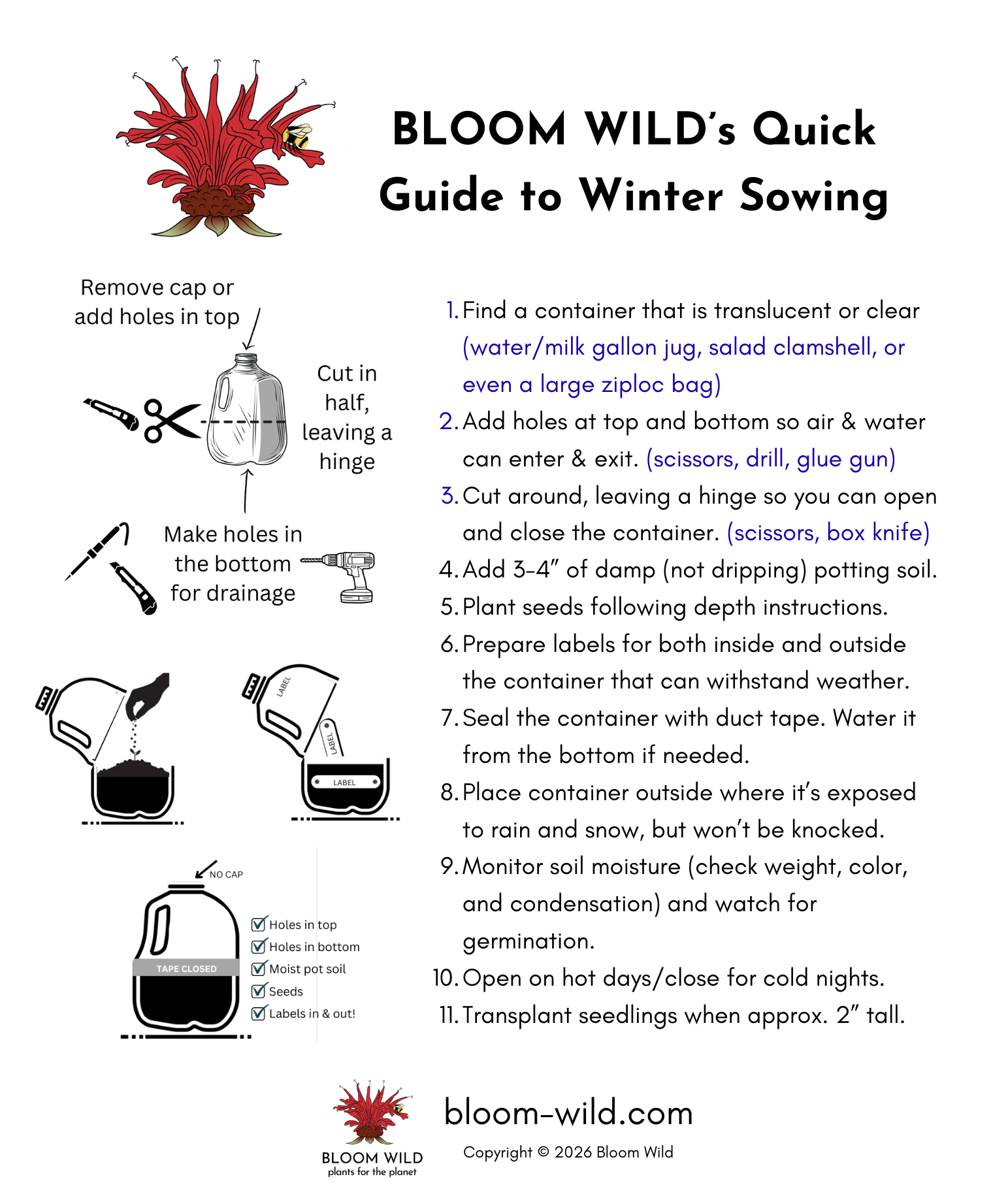
Grow your own native plants!

Growing your own plants is a great way to increase the number and type of plants you have in your garden, without breaking the bank. WINTER SOWING is an easy way give your seeds their best chance for germination. Download and follow our simple guide. Some local native plant groups offer free workshops. Once you have collected, or purchased seeds, you can check to see if that plant's seeds need cold moist stratification to break dormancy (many plants native to this area do!).

What are "deer resistant" plants?
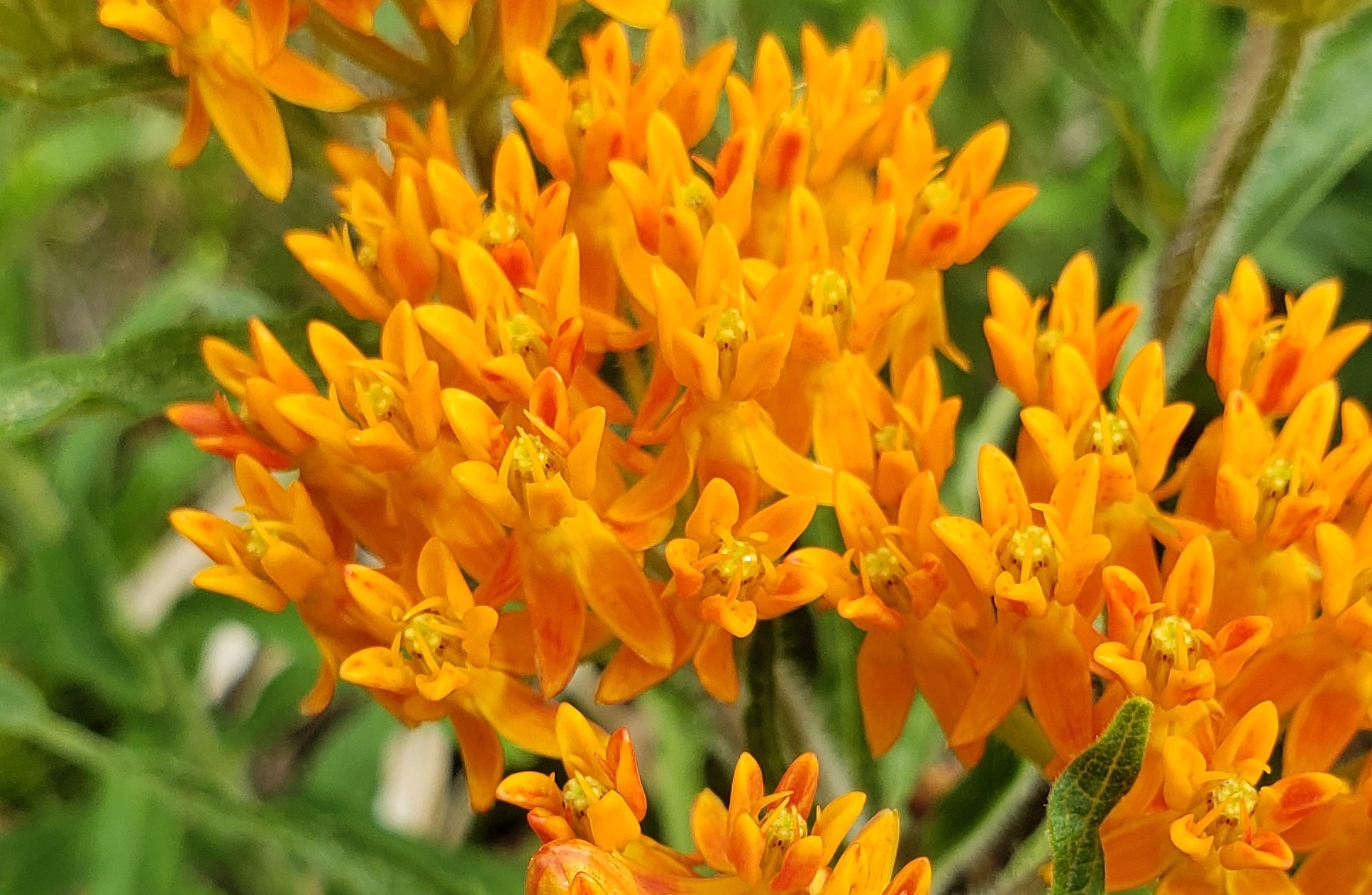
No plants are deer-proof. The term “deer resistant” describe plants that tend to survive at least a medium level of deer pressure. “Survive” can mean that it is chewed on but the plant survives or that it is left alone. Some of the things that might make a plant deer resistant Texture: fuzzy/hairy leaves, ferns, and grasses are often left alone. Aroma: plants with a strong smell, including many plants in the mint family, are less enticing to deer. Toxicity: whenever possible, deer will avoid poisonous plants- like those in the milkweed family. Deer palates vary by deer, by herd, and by location - so the most useful info on deer resistance is usually from your neighborhood. So many caveats to this: deer palates are variable between different herds and geographic areas and can change over time. Starving deer will eat anything. Young deer will try everything. The best source of information on what deer leave alone is to watch what is doing well in your neighborhood. Some plants do not release toxins until they have been stressed (read: nibbled upon) or stop releasing the toxin once they have put out seeds. But, final caveat, deer don’t read lists and don’t really care what they are supposed to do.

Recommended Reading

We are so excited about gardening with native plants, that this list could go on for miles. But to help you get started, here are some our top recommendations and why we like them,

CONTENT COMING SOON!

Recommended Tools

We have no affiliation with any of these products. In fact, the brands listed are just examples. These are tools that help us work smarter instead of harder. Depending on what kind of gardening work you undertake, they may help you too.

CONTENT COMING SOON!

Past & Future Events

CONTENT COMING SOON

WANTED

Dead or Alive

Ficaria verna, Lesser celandine

Alliaria petiolata, Garlic mustard

Berberis thunbergii, Japanese barberry

Phyllostachys aurea, Golden bamboo

Vinca minor, Periwinkle

Lonicera japonica, Japanese honeysuckle

Miscanthus sinensis, Chinese silvergrass

Hedera helix, English ivy

Maryland’s Most
Invasive Species

Saturday, January 18th, 2025- Laurel, Md
Free, hands-on workshop on growing native plants from seeds. We provide the soil!
Sunday, April 13, 2026- Takoma Park, Md
Bloom Wild’s Spring Native Plant & Spring Ephemeral Sale
Help your garden BLOOM WILD this spring!
More than 80 species of your favorite locally native plants will be available! Always responsibly sourced; always free of neonicotinoids. This sale includes hard to find plants, such as spring ephemerals, as well as a large selection of groundcover plants for all conditions, and even shrubs. Lots of easy to grow favorites will be available. Hope to see you there!